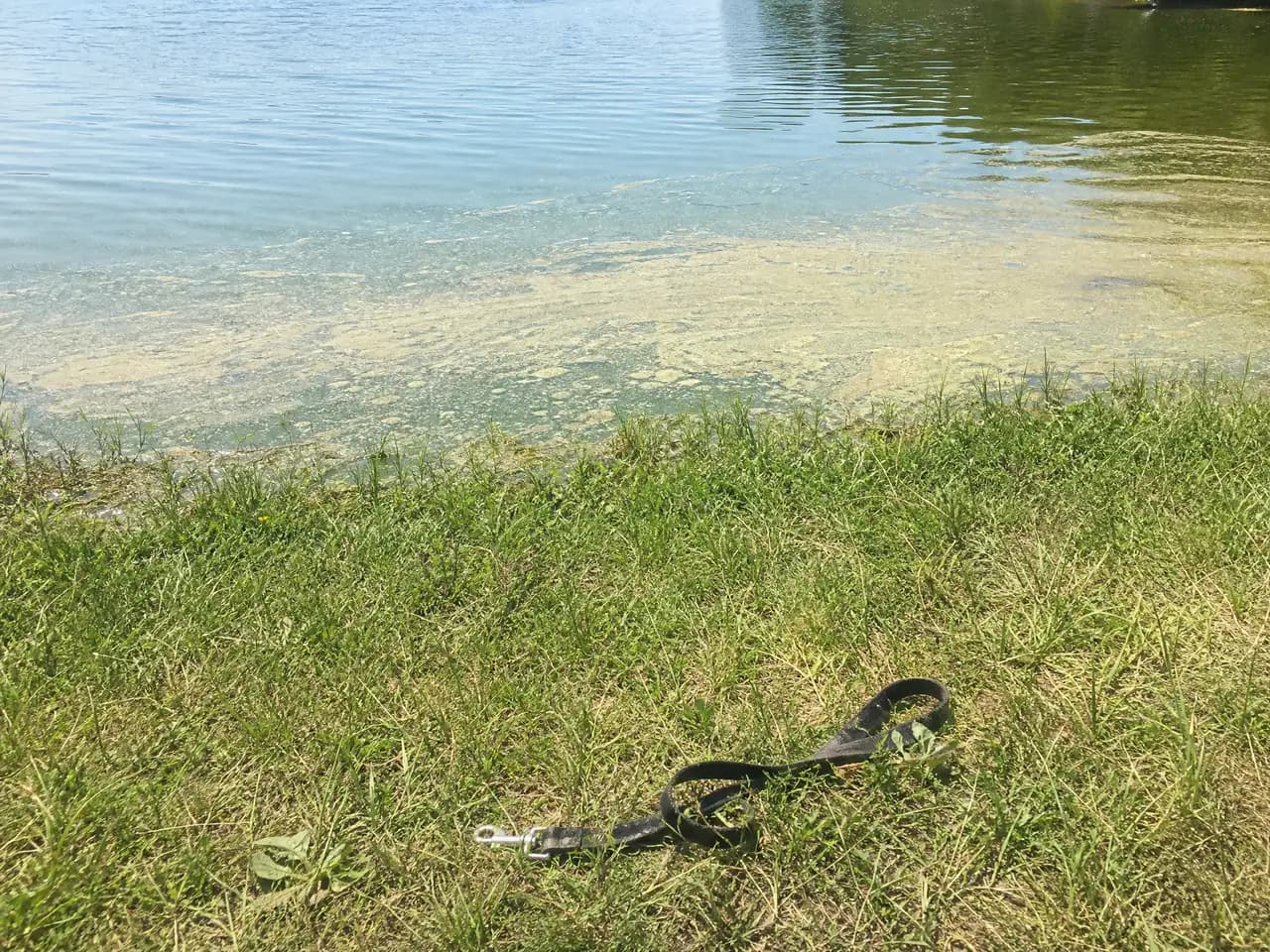
If your dog was just in a lake or pond and is suddenly vomiting, stumbling, drooling excessively, or acting disoriented, treat this as a potential emergency right now. Blue-green algae poisoning moves faster than almost anything else, and there is no antidote once symptoms take hold.
What Blue-Green Algae Actually Is
Despite the name, blue-green algae is not algae at all. It is a bacteria called cyanobacteria that grows in warm, nutrient-rich, often stagnant water like lakes, ponds, and slow rivers, especially during hot summer months. Blooms can appear blue, green, brown, or red, sometimes looking like spilled paint or pea soup floating on the surface. Not every bloom is toxic, but there is no reliable way to tell just by looking, so the safest approach is to treat any visible bloom as dangerous.
How Fast Symptoms Appear
This is the detail that matters most. Symptoms of blue-green algae poisoning can show up anywhere from 15 minutes to a few hours after exposure, and in severe cases, dogs have died within an hour of swimming in contaminated water. This is dramatically faster than almost any other disease, which is why "wait and see" is especially dangerous here.
What the Symptoms Actually Look Like
Watch for vomiting, diarrhea, excessive drooling, weakness, disorientation, difficulty standing, tremors, seizures, and labored breathing. The two main toxin types cause different symptom patterns. One attacks the liver and can cause jaundice, dark urine, and abdominal pain as it progresses. The other attacks the nervous system and can cause seizures, muscle tremors, and paralysis. Both can lead to shock, respiratory failure, and death within hours to days if untreated.
What to Do Right Now if You Suspect Exposure
Rinse your dog thoroughly with clean, fresh water immediately to remove any algae from their fur, since dogs often ingest more toxin later by licking themselves clean. Do not wait to see if symptoms develop. Call your vet or an emergency animal hospital immediately and let them know you suspect algae exposure so they can prepare.
There is no antidote for the toxins involved. If your dog is caught early enough and is still stable, a vet may be able to induce vomiting, perform gastric lavage, or administer activated charcoal to reduce how much toxin gets absorbed. Once a dog becomes symptomatic from the liver or nervous system toxins, prognosis becomes poor to grave even with aggressive treatment, which is exactly why speed before symptoms appear matters so much.
Why This Disease Deserves Extra Caution
Unlike parvo or lepto, there is no supportive care that just buys time while the body fights it off. The damage from these toxins can be severe and fast, and some dogs who survive initial exposure still go on to develop chronic liver problems afterward.
How to Avoid This Entirely
Avoid letting your dog swim in or drink from water that looks stagnant, discolored, scummy, or has a foul smell, especially during warm months. Bring clean water for your dog on hikes and outings so they are not tempted to drink from natural sources. If your dog does swim in water you are unsure about, rinse them off immediately afterward rather than waiting until you get home.
Because this moves so much faster than other outbreak categories, checking ParvoMaps before choosing a swimming spot is one of the more genuinely useful precautions available. A reported case at a specific lake or pond is the kind of warning that can be the entire difference between a fun afternoon and an emergency vet visit. You can also see outbreaks in your state for your area.