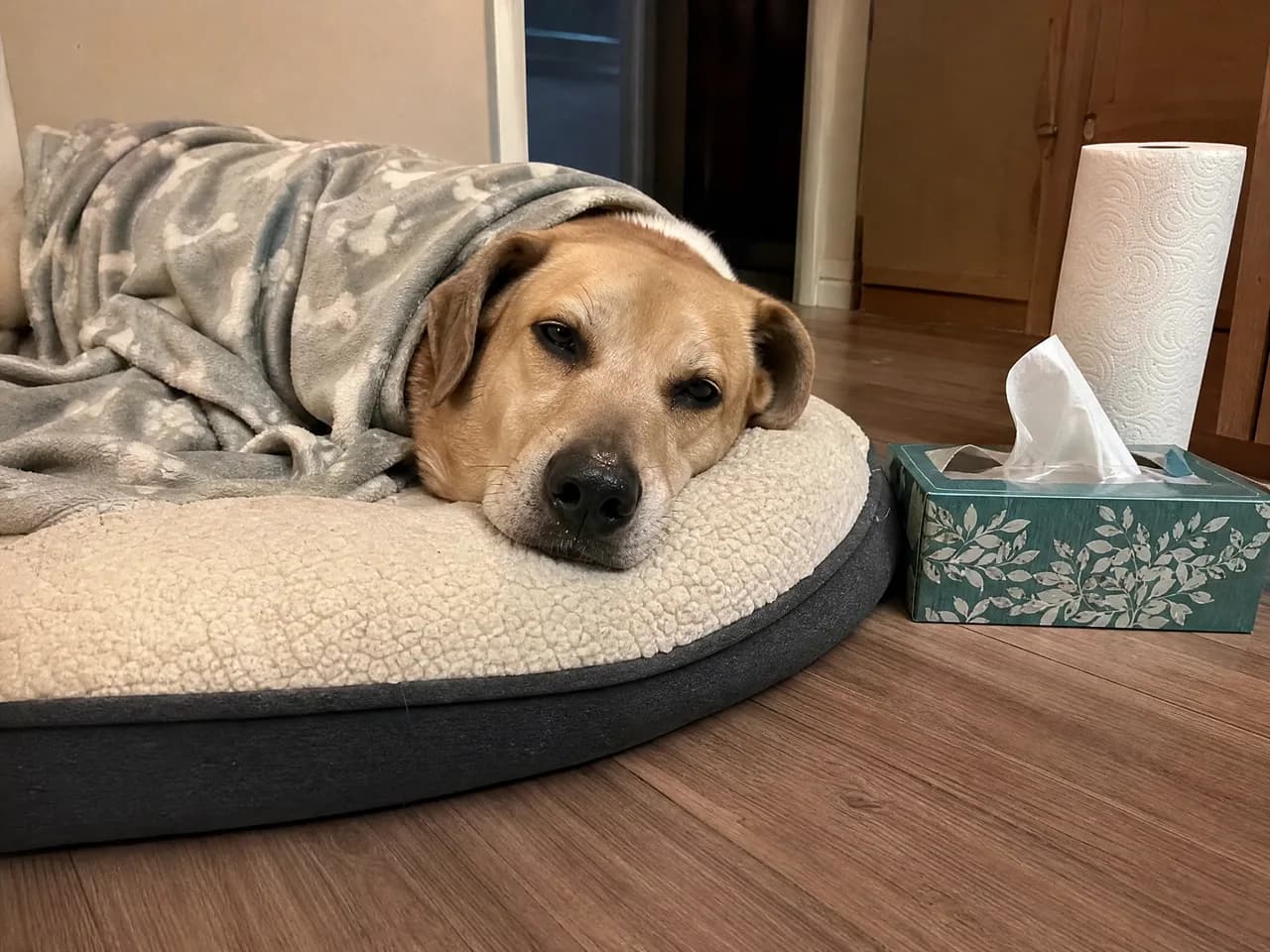
If your dog has a sudden cough after daycare, boarding, or the dog park, this is one of the most common questions owners end up asking, and the honest answer is that the two conditions overlap enough that even vets sometimes need testing to tell them apart with certainty.
What Kennel Cough Is
Kennel cough, more formally canine infectious tracheobronchitis, is not one single germ. It is an umbrella term for a group of viruses and bacteria that cause similar symptoms, most commonly the bacteria Bordetella bronchiseptica along with canine parainfluenza virus and adenovirus. The hallmark symptom is a dry, hacking cough often described as sounding like a goose honk. Most cases are mild and resolve within 10 to 20 days without needing much beyond supportive care.
For more on how long a dog stays contagious and when it is safe to return to group settings, see our guide on how long kennel cough is contagious.
What Dog Flu Is
Canine influenza is a specific viral infection, caused by either the H3N8 or H3N2 strain, and it tends to hit harder. Because dogs have little to no natural immunity to these relatively newer viruses, nearly all exposed dogs become infected, and roughly 80 percent go on to show visible symptoms while the rest remain contagious without looking sick.
How to Tell Them Apart
This is genuinely difficult, because both conditions share overlapping symptoms: coughing, nasal discharge, and sometimes fever. A few patterns lean one way or the other.
Kennel cough tends to produce a milder illness with a dog that otherwise acts fairly normal, still eating and playing between coughing fits. Dog flu more often comes with additional symptoms beyond the cough: fever, lethargy, reduced appetite, and a cough that can last longer, often 10 to 21 days.
Dog flu carries a higher chance of progressing to pneumonia and, though rare, can be fatal, while uncomplicated kennel cough almost never is. Vets often describe severe canine influenza as looking like "a really bad case of kennel cough," which captures how much overlap there is on the surface.
Because the symptoms genuinely mimic each other, a definitive diagnosis usually requires lab testing, such as PCR or antigen tests, rather than relying on how the cough sounds or looks.
What to Do Either Way
Regardless of which one your dog has, the same basic steps apply: isolate them from other dogs, avoid daycare, boarding, and dog parks until they are cleared, and watch closely for signs of worsening, especially labored breathing, high fever, or lethargy, which push the situation toward needing more aggressive treatment.
Vaccines exist for both. The kennel cough vaccine targets Bordetella specifically, and separate vaccines cover the H3N8 and H3N2 flu strains. If your dog is regularly around other dogs at daycare, boarding, or dog parks, both vaccines are worth discussing with your vet, since having one does not protect against the other.
If there has been a reported cluster of respiratory illness at a specific facility or park near you, ParvoMaps tracks kennel cough and dog flu reports, which can help you decide whether it is worth avoiding a location for a while before your dog's next visit. And if your dog has been sick, reporting your own case helps the map grow and protect other dog owners. You can also see outbreaks in your state for your area.